
2025 Fall Newsletter
Welcome to the OU Foundation Legacy Newsletter
Here, you can learn about the impact your support has on our community, our state and our world. We hope you enjoy these stories. Visit our website to learn how you can support OU.
With Donor Support, Gracie Rolin Turned Tragedy into Determination
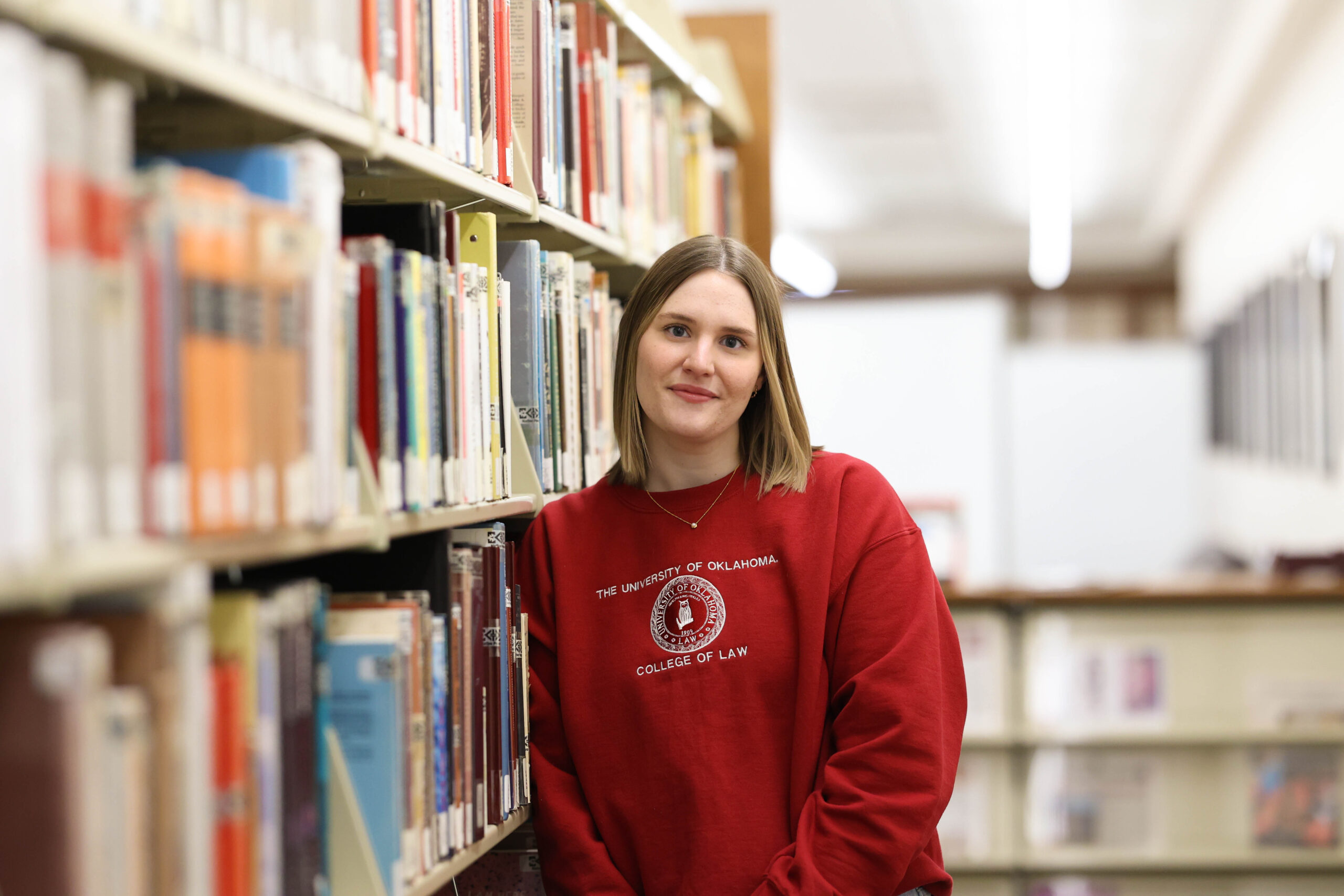
“Education is one of the best gifts you can give. It opens doors and creates opportunities. College is expensive, and scholarships make it possible for students like me.”
Gracie Rolin knows the value of donor support, especially following a family tragedy.
Read More
Gracie Rolin is very busy. And very grateful.
Being a student at the University of Oklahoma College of Law explains her busy days. Receiving scholarship support during her undergraduate and law school experiences accounts for her gratitude.
Without donor support, her path would have been much tougher – maybe even impossible. Now, as she works her way through law school, she’s deeply thankful to OU donors who support students.
Rolin did her undergraduate work at Oklahoma State University, majoring in political science with a minor in campaigns and lobbying. “I’ve always said that if I do anything in politics, it’s going to be behind the scenes,” she said.
Paying for college wasn’t easy, and as she relied on her parents and her own investment, scholarships were a game-changer. “Scholarships allowed me to focus on my studies,” Rolin said. “I don’t know if I would have been able to do it without them.”
After graduating from OSU in December 2023, Rolin took a job with the McClain County Court Clerk’s office and quickly fell in love with the law. “I found it so interesting,” she said. “I would sit there and say, ‘You’re never going to believe what happened in this case.’”
A judge noticed her enthusiasm and told her, “Maybe you should go to law school. Normal people don’t find that part interesting.” That moment reaffirmed her desire to learn the law.
Rolin took the LSAT, applied to three schools and chose OU. At OU, scholarships were as critical a component to her success as they were during her days in Stillwater. “Law school is a full-time job,” she said. “I’m here 9-to-5 most days, and I’m grateful for the scholarship support that lets me focus on my studies.”
That support would take on deeper importance after her father, Randy Rolin, lost his life in June 2023 when a tornado hit the tractor-trailer rig he loved to drive. “He was the main provider for my family. Without scholarships, law school would have been hard. I don’t know if I would have even considered it.”
Rolin’s mom, Jana, who works for Purcell Public Schools, continued to help her daughter reach her educational dreams. Still, scholarships bridged the gap, allowing Rolin to finish her studies in Stillwater and come to Norman to continue her dreams.
“Education is one of the best gifts you can give,” Rolin said. “It opens doors and creates opportunities. College is expensive, and scholarships make it possible for students like me.”
From a Supporter Like You—Robert “Bob” McIntosh
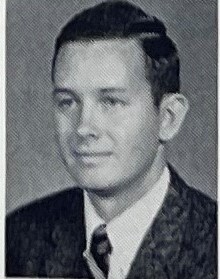
Rooted in his practical business knowledge and humble upbringing, Bob McIntosh embodies the philosophy “you reap what you sow.” And after his fruitful career, this University of Oklahoma alumnus is granting the next generation of Sooners access to the same opportunities he feels altered the trajectory of his life for the better.
Read More
Bob was raised in Tulsa, where he learned about OU from a young age thanks to the high-performing football program led by legendary coach Bud Wilkinson. As Bob grew older and began thinking of his future, he decided to pursue a college education.
“I was very grateful to attend a university that was state supported,” Bob said. “It was relatively affordable. I realized how much that meant and how much it helped me.”
After graduating high school in 1961, he came to Norman, enrolled at OU, and immersed himself in campus life by joining the Sigma Chi fraternity. He earned an undergraduate degree in marketing and finance from the Price College of Business before deciding to pursue an MBA.
“While I was earning my MBA, I was awarded an $800 Lew Wentz Scholarship,” Bob said. “The essence of that was that I got the scholarship and I was obligated to do 200 hours of service for the university.”
By fulfilling this obligation, most of Bob’s MBA expenses were covered by his scholarship. He paid for the remainder of his tuition with money he earned working part-time jobs. Though juggling school and work was difficult at times, he feels the experience set him up for many future successes – which he hopes to recreate for future graduate students.
“My plan is to leave endowed scholarships, primarily for the study of Business Administration, and more particularly, for graduate study in business,” Bob said.
Bob attributes his success in business to his degree, and he hopes future students are inspired by the professional success he found after graduating from OU.
“I drove an old Chevrolet to Albuquerque with $400 in my pocket,” Bob said. “Sixty years later, I’ve accumulated an estate I never dreamed I would have.”
In Albuquerque, Bob worked for Sandia National Laboratories as a mainframe computer programer and EDP auditor. He took a three-year break to program mainframe computers for the U.S. Army, serving in San Antonio, Washington D.C., and El Paso. He earned the rank of captain before returning to Albuquerque.
On typical weekends, Bob enjoyed 36 holes of golf with his friends and hiking in the Sandia Mountains. Between hobbies, Bob invested his money based on the wisdom he absorbed from his beloved OU professors, Dr. Robert Ford and Dr. Vernon Upchurch.
“I was fortunate to be investing in that period when the stock market went through a prolonged bull market, and that enabled me to really build my estate in a way that I would never have thought was possible,” Bob said.
Bob’s estate exceeded his wildest dreams thanks to his OU education and some simple financial wisdom.
“All things in moderation. Work moderately, live moderately, and spend moderately. And anticipate your later years.”
By living a modest life and thoughtfully planning for his future, Bob enabled himself to open doors for hard working graduate students. The scholarship he invests in will foster their ambition and practical pursuits, just as generations before Bob did for him.
“[I hope students] would in turn leverage that money and help them throughout the remainder of their life… I’d be even more flattered if, as they got older, they gave back to the University too.”
Through his generosity, Bob ensures that the seeds of opportunity once planted for him will continue to take root in the lives of Sooners for generations to come.
Qualified Charitable Distribution—A Smart Way to Support OU
Many supporters of the University of Oklahoma ask us about the most effective ways to make a lasting impact on the academic excellence, groundbreaking research, and community service that make OU so special. One option that has become especially meaningful for donors is the Qualified Charitable Distribution (QCD).
A QCD is a direct, tax-free transfer from your individual retirement account (IRA) to a nonprofit like the OU Foundation. If you are age 70½ or older, you may be eligible to make a QCD that not only supports OU’s mission but can also lower your taxable income. For those who are 73 or older and required to take a minimum distribution (RMD), a QCD can count toward that obligation while reducing the risk of higher taxes and penalties.
As longtime supporter Richard Cochran shares:
“I use my inherited IRA RMD as a tax planning strategy. It reduces my Adjusted Gross Income and keeps my Medicare premiums at a lower rate.”
This year, the IRS allows QCDs up to $108,000 per individual—or $216,000 for couples filing jointly—to be directed to charities. By giving through a QCD, you can invest in OU’s future while keeping more of your own resources working for you.
To learn more about how a Qualified Charitable Distribution could benefit you and make a difference for the OU community, visit our dedicated QCD page for helpful details and examples.
‘Quiet philanthropist’ and Inventor Leaves Estate to OU
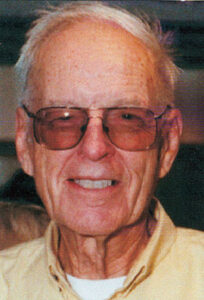 William H. Barkow, an engineering alumnus whose groundbreaking achievements went largely unsung during his lifetime, established an enduring educational legacy for generations of OU students.
Barkow, who died in 2014 at the age of 92, was a 1943 electrical engineering graduate and served in World War II before embarking upon his career at Radio Corporation of America, the longtime electronics giant now owned by General Electric. He was a member of a two-person team that developed the solid-state “tubeless” television set, the first major design breakthrough since RCA had pioneered the color television 20 years earlier.
Read More
Barkow held more than 40 patents at RCA, but he did not profit from his innovations. He built his wealth as an active investor and made plans late in life to leave virtually everything he owned to the OU College of Engineering, including proceeds from the sale of homes in Nevada and California.
“Bill Barkow was a humble and quiet philanthropist who was excited to invest in the next generation. Although he accomplished great success in his career, Bill was quick to speak about the success of his sister and reveled in the thought of helping future students,” said Jill Hughes, AVP of Principal and Planned Giving. “Bill’s generosity continues to impact students today and has encouraged others to do the same.”
Years before his death, Barkow established the William H. Barkow Scholarship Fund for electrical engineering students. He also created the Dorothy Grace Barkow Scholarship in honor of his sister, who was also an engineer, in hopes of encouraging women to enter the field.
Bill and Dorothy Barkow and their sister, Margaret Barkow Heidmann, visited OU in 2003. Following the visit, both sisters left their estates to Bill to benefit the university, though neither was an OU alumna.
Barkow’s estate established the William H. Barkow Academic Enrichment Fund, which supports projects and programs designed to give OU engineering students real-world and practical learning opportunities. His estate also established the William H. Barkow Graduate Fellowship Fund to support graduate students who will add significant value to the college’s research program and instruct, coach and mentor undergraduates. Funding was also set aside for two William H. Barkow Presidential Professorships. Candidates will be assistant or associate professors nominated by students, faculty or alumni.
“Bill Barkow exemplifies the qualities we hope to instill in our electrical engineering graduates,” said J. R. Cruz, director of OU Electrical and Computer Engineering and OU’s Tilley Chair in Electrical Engineering.
“He worked hard, contributed technical innovations that enriched our lives, and chose to support the aspirations of future generations. His simple, unassuming life belied the power of his gifts.”
George Lynn Cross Heritage Society Membership
The OU Foundation established a special organization, the George Lynn Cross Heritage Society, to honor donors who have established gifts in their estate. These thoughtful and well-planned gifts strengthen the future of the University of Oklahoma and create an enduring legacy for donors.
The society is named in honor of Dr. George Lynn Cross, OU’s beloved seventh president, whose many contributions to OU included the establishment of the University of Oklahoma Foundation.